
Blog post
Contract Red Flag Checker: 21 Clauses to Scan Before You Sign (Freelancer + Founder Guide)
Use this contract red flag checker to review risky clauses fast, negotiate from strength, and avoid expensive terms before signing.
4/6/2026 • 16 min read • RedFlagged Team
Contract red flag checker: what it is and why it matters
A contract red flag checker is a practical review workflow for finding high-risk clauses before you sign. Instead of reading every line with the same intensity, you prioritize terms that most often create legal disputes, payment problems, and ownership conflicts.
If you are a freelancer, founder, consultant, or operator, this approach helps you move faster without skipping risk. Use AI contract analysis for first-pass triage, then validate the highest-impact clauses with business judgment and legal review when needed.
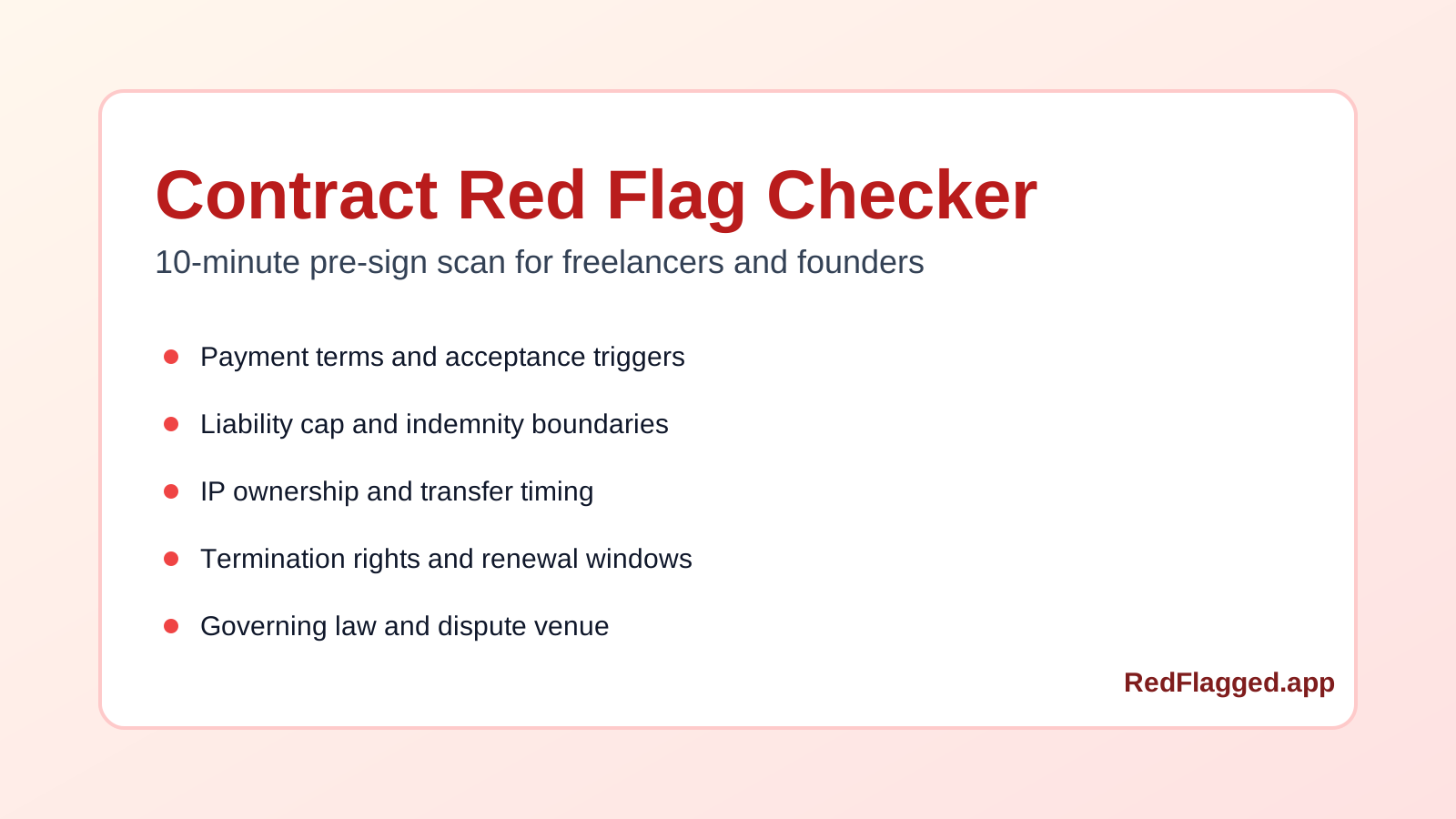
How to use this contract red flag checker in 12 minutes
You do not need to renegotiate an entire agreement to reduce risk. Run this sequence first, and escalate only the clauses that can materially affect downside.
- Minute 1-2: Confirm parties, scope, and defined terms so obligations match the right entity.
- Minute 3-4: Check payment triggers, due dates, late fees, and acceptance criteria.
- Minute 5-6: Review liability cap, indemnity, and excluded damages.
- Minute 7-8: Verify IP ownership, licensing, and transfer timing.
- Minute 9-10: Check termination rights, cure periods, and renewal windows.
- Minute 11-12: Review governing law, venue, and dispute mechanisms.
21 contract red flags this checker should catch
The strongest contract red flag checker focuses on recurring patterns that appear in everyday templates. These are the terms most likely to create post-signing problems.
- Vague deliverables that let scope expand without extra payment.
- Payment tied to subjective approval with no objective acceptance criteria.
- No late payment fee or no explicit due dates.
- Client can withhold final payment after delivery for open-ended reasons.
- Unlimited liability with no cap tied to contract value.
- Consequential damages not excluded.
- Broad indemnity covering events outside your control.
- IP ownership transfers before full payment.
- No carve-out for your background IP, templates, or methods.
- Perpetual warranty obligations with no time limit.
- One-sided termination rights with no symmetry.
- No cure period before breach remedies apply.
- Auto-renew language with narrow cancellation windows.
- Non-compete language hidden inside confidentiality or miscellaneous clauses.
- Overbroad non-solicit restrictions with unclear scope.
- Confidentiality terms with no standard carve-outs.
- Security obligations that are undefined or operationally unrealistic.
- Audit rights that are broad, frequent, or unbounded.
- Forum selection in a jurisdiction that is impractical to defend.
- Fee-shifting language that penalizes routine disputes.
- Order of precedence clauses that let attachments override negotiated terms.
Contract red flag checker for freelancers: 5 clauses that impact cash flow first
For freelancers, the highest priority is cash-flow protection. A profitable project can become a loss when payment terms are weak or acceptance criteria are vague.
- Deposit amount and due date before work begins.
- Milestone invoice schedule tied to clear deliverables.
- Deemed acceptance after a defined review window.
- Late-payment fee and suspension rights for non-payment.
- Final delivery conditioned on final payment.
Contract red flag checker for founders: 5 clauses that impact company risk
Founders often absorb risk in vendor, partnership, and enterprise paperwork. These five checks usually have the biggest downside impact.
- Liability cap alignment with contract value and risk profile.
- Indemnity limited to fault-based conduct.
- IP ownership and licensing boundaries across integrations.
- Data processing and security obligations scoped to your real controls.
- Termination rights that preserve business continuity.
How to negotiate when the checker finds red flags
Negotiation speed improves when you make specific requests. Instead of saying "this clause is risky," identify the exact sentence, explain the operational impact, and propose narrower replacement language.
When possible, offer two acceptable options. Counterparties are more likely to agree quickly when they can choose between workable alternatives.
AI contract analysis + human review: the practical stack
AI contract analysis is best used as a screening layer. It helps classify terms, summarize risk, and draft revision options, but you still need human judgment for commercial context and legal strategy.
A reliable process is: run contract red flag checker, rank issues by downside, negotiate the top items, then escalate unresolved high-stakes points to counsel.
Final checklist before you sign
Before signature, run one final pass and confirm all negotiated updates are reflected in the final version, including exhibits and order forms.
- Commercial terms are explicit and measurable.
- Payment mechanics protect your cash flow.
- Liability and indemnity are bounded and proportionate.
- IP rights are clear and transfer timing is correct.
- Termination and renewal mechanics are balanced.
- Dispute clauses are realistic for enforcement and defense.
- Final draft matches negotiated redlines exactly.